Friday, February 27, 2026

A Podcast, a Pause, and a Reflection on Training

image of a microphone used by podcasters

The other day I listened to the podcast, 'How to make learning stick and drive performance', which discussed training/learning, and a lot of what was said resonated with me. As part of my own continuing professional development, I am currently undertaking training, which perhaps made this reflection even more meaningful. 

As I am not much of an auditory person, I used to listen to podcasts sparingly, but recently I am making an effort to tune into HR podcasts. That's how I came across this podcast. The participants discussed various aspects of learning, because it was, of course, the topic of that episode. I was amused to hear them talk about the “less impactful” training sessions they’ve attended and almost laughed out loud listening to some of their experiences.

Anyway, the podcast got me thinking, and here I am blogging about it. It was perhaps the much-needed impetus to revive this blog, which has been inactive for almost three years now.

Coming back to the topic, I agreed with most of the points discussed. It reminded me about people who are always keen to undertake training and others who need a lot of motivation and encouragement to attend one. But the key point was this – whether voluntary or mandatory, does the learning from the training stay with the trainee? Unfortunately, the answer is that most of the time, it doesn’t.

Throughout my career and otherwise, I have seen that happen numerous times: people attend training because they were told to, or because it was a means of 'escape' from the normal routine. Organisations invest a huge amount of time and effort in training, only for attendees to enjoy the day out or take a break from usual work. In most cases, there are no mechanisms in place to evaluate outcomes or gather meaningful feedback on training effectiveness. Additionally, there is seldom any process to ensure that the learning is put into practice. When learning does not lead to behaviour change, it becomes a cost rather than a capability-building investment.

Add to the mix an employee who is always on training – you name a course, they are in it. Quite often, they sign up for training they don’t need or that is beyond their capabilities. When that happens, not only does routine work suffer, but it also leads to increased stress levels for themselves and others who have to fill in. To make matters worse, the learning is, once again, forgotten or seldom used in real-life scenarios.

Don’t get me wrong - I am all for training. But it should be the right one for the job role, the employee, and the organisation. Also, if a mechanism can be put in place whereby someone who has been trained in a specific topic can pass on that learning to the entire team, it would add more value to the exercise. Incidentally, this is something that we are aiming to trial at my organisation, and I am excited to see the results. On a lighter note, every training has some value – even a less impactful one can serve as an example of the futility of the exercise.

Another key point discussed in the podcast was the support and attitude of senior management towards training. If the managers perceive training as a mere tick-box exercise to meet KPIs or parameters, then it is highly likely that trainees will view it similarly and won’t derive much value from it. On the other hand, if senior leadership sees training as a key and important step towards learning and development, they will be invested in both the training and its benefits. It would cease to be an annual routine exercise or something quickly put together because funds were left over at the end of the year.

Somewhere along this spectrum are situations where people are placed into roles without any skill assessment or role-specific training. Very few people have the courage to say they are not trained or experienced enough to handle a role. Often, the person offered the role lacks awareness of their own strengths and weaknesses in relation to its demands. The result is a complex conundrum comprising dissatisfied subordinates, a stressed supervisor, unsure colleagues and service levels taking a hit. It could also lead to a perceived lack of transparency, resulting in lower morale.

This is an area where HR can work together with managers to devise appropriate training and development plans. It is important to enable and empower those being placed in new roles with proper training, because a wrong choice can spoil the work environment. Then it may fall to HR to come in and put out the flames. Sometimes, the damage can be so quick and deep that interventions become difficult.

I am a believer in people’s abilities. But I am also aware that on the other side of the coin are their limitations. Being an excellent employee does not automatically make someone a good manager. We can see plenty of examples of this in sports – a great player seldom becomes a great manager, while an average player might prove to be a better one. Most people have skills. Training should be designed to hone those skills, enabling them to do their job well and also allowing others to do theirs well. It is always important to think about the people around you because, whether you realise it or not, you leave an impression on them. You have a chance to make sure it is a positive one and not a negative one. Training can help you achieve this.

To conclude, I think the saying, ''What gets measured gets managed” applies equally to training. If it is not measured for impact and outcomes, it will not be managed effectively. And anything unmanaged carries risk. What are your thoughts?

Saturday, June 3, 2023

Of Little Trips and Great Learnings

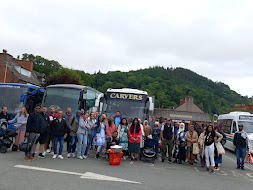
The other day, we (some staff, volunteers and service users of Mary Seacole House, Liverpool) went on a day trip to Llangollen. This wasn't the first time I accompanied them on a day trip. In fact, this must have been the third or fourth time I am going on a trip with the group since February 2022. Whenever I go on a trip with the group, it fills me with endless joy. It is not just the fact that I love travelling, but the fact that these trips give me an opportunity to know the people around me better.  

Group of people

For most service users, these trips are new experiences. Many of them don't get an opportunity to travel out of Liverpool. They spend all the time cooped up in the hotels/hostel after returning from classes/activities organised by MSH. And if someone gets an opportunity, they don't usually have the money or resource to fund their trip. For almost all of them, these trips are avenues of escape from the harsh realities of life. It is something to look forward to and remind them that despite all the difficulties, they are valued and cared for, at least by us.    

For us, as service providers, it is an opportunity to help them improve their mental health and well-being. Although we are mostly cash-strapped and have to depend on small pots of funds/projects, trips like these are ways to offer the service users a much needed respite from the daily gloom. It is a holistic way to provide them with enriching life experiences with positive impacts on mental health.

After getting back from our recent trip to Llangollen, I reflected on it and realised a few things that these trips did: 

Strong community and social connection: All our trips brings the community closer as it fosters better social connection with each other. A vast majority of our service users often feel isolated and lonely. The trips that we take them on gives an opportunity for people to come together, relax and support each other. It helps forge meaningful connection with oneself and others who share similar experiences. As such, a sense of belonging sets in, which goes a long way in boosting self esteem, reducing isolation and promoting overall well-being.

Better physical and emotional well-being: Although the trips are far and few in between, they nevertheless include physical activities and outdoor adventures. It offers an excellent opportunity for service users to engage in exercise and explore the great British outdoors. As we all know, physical activity has a positive impact on mental health as it releases endorphins and reduces stress levels. Furthermore, time spent in nature has a calming effect on both body and mind, which in turn help alleviate symptoms of anxiety and depression. So, the trips are not just us ticking a few boxes, but a truly powerful therapeutic tool that promotes well-being and better mental health.

Build skills and resilience: Trips are great ways to develop and enhance skills and resilience. This is true for both service providers and users. Engaging in new activities/experiences and stepping out of the comfort zone can feel like an intimidating task. However, being in the company of people you know & trust, while trying out new experiences in a supportive environment can work wonders for all. Learning new skills and successfully navigating unfamiliar situations can boost self esteem, confidence and mental health. People feel empowered and resilient as a result of better mental health. 

Break from the routine and chance for personal growth: Daily routines can feel repetitive and boring, resulting in a feeling of stagnation and poor mental health. Organising trips helps the service providers to break free from the daily routines (which, in our case,  isn't monotonous). For the service users, it is a chance to understand the cultures and places of the country better. Trips often stimulate curiosity, broaden the horizons and facilitate personal growth. Often people find a change in their perspectives, discover hidden talents and find a renewed purpose and excitement in life. 

Emotional connect: Often, trips offer opportunities for people to open up and build emotional connection with one another. Journeys are opportunities for an open and accepting atmosphere where individuals can discuss their experiences, challenges, and triumphs. It is a chance for people to reflect and renew themselves by drawing on the positive experiences from the trip. It also helps in creating a sense of collective understanding, empathy, and support among all those travel together.

There is more to each trips that we go on with our service users. We travel together, we eat together, we see and explore new places together, we know and understand each other better. Invariably, on our way back to Liverpool, we sing songs together and have loads of fun. As I listened to the lovely vocals in Hindi, Urdu, Spanish, Persian and Arabic being rendered that evening, I realised that just like in music, Mary Seacole House too speaks the universal language of love. What better message can we rely to the world in these troubled times? 


Thursday, May 18, 2023

How Volunteering Improved My Mental Health

A year and a half ago, I was pretty content with my writing gigs, sketching & drawing, and doing things I thought made me happy. As the world returned to normalcy, I slowly emerged from the stress and misery I felt during the pandemic. Although my work and hobbies had kept me going through those dark days of social isolation and loneliness, a strange feeling of void continued to nag me all the while.

Each day found me struggling to find any sense or purpose to what I did – life was becoming more and more mechanical. Even the things I enjoyed the most in the past, drawing and writing, started to feel more like a boring task I had to complete. No matter what I did, I found myself getting frustrated and unhappy.

A lonely woman

At that time, I was living in a self-imposed bubble, and had minimal contact with people outside my family as I didn't feel like talking to or meeting with friends or socializing in any way. Of course, I enjoyed the trips with my family, and perhaps that was the only thing in life that made some sense to me then. Everything else felt like pre-programmed activities I had to do, whether I enjoyed them or not.

Then, one day, I reconnected with a friend when she phoned me out of the blue. We hardly spoke to each other since the pandemic started. I was happy to hear from her, and among other things, she asked if I would like to volunteer with the organization she works for. My first instinct was to say no. But then, I didn't want to disappoint her and so I said: 'let me see'.

I was in two minds – I did want a change, but I wasn't sure if I was cut out for volunteering. I like to help people whenever I can, but I haven't volunteered with an organization before. So, I gave my friend a half-hearted yes that day thinking I'll find some excuse for not going.

I had made up my mind not to go. I had tons of excuses lined up – my work, my hobbies, the nasty weather, the distance – the list was quite exhaustive. Luckily, on the day I was supposed to start volunteering, my friend messaged saying that the event/activity scheduled for the day was canceled due to bad weather. I was relieved and happy.

But my relief was short-lived as she called me a couple of days later and asked me to visit the organization and see things for myself at least once. Perhaps, on that day I had no energy to say no to her or I couldn't find a plausible excuse, or just because it was meant to be, I decided I would go.

So, on a cold, windy, and gloomy day in February, I went to volunteer with Mary Seacole House, Liverpool. I didn't know what to expect or what to do when I got there. But the moment I stepped inside Kuumba Imani Millennium Centre, where all the activities of MSH take place, I felt something different. And how that decision changed my life!!!
An image saying volunteer

I was drawn into the buzz – several activities were happening simultaneously. English class for non-English speakers, peer support group, mental health activities, & whatnot! It seemed like I was transported from a vacuum into a buzzing world of non-stop activities. Contrary to my fears, I wasn't intimidated by it. Despite the chaos around me, I felt strangely at home.

I took it all in, and before I knew it, I started working as a volunteer there. I was assigned the task of helping a group of people to learn English. Some didn't even know the English alphabet, while others could understand the language reasonably well. Most of them couldn't speak well, so I had to help them speak and learn English. Thus started my volunteering journey.

That day, I went to Mary Seacole House just to see what it was all about, and I ended up agreeing to volunteer three days a week. I was assigned to help run women's and men's peer support group, through which MSH run several mental health and well-being programs for women, men, and families.

Several of the service users were migrants, refugees, and asylum seekers. They all needed help to learn English. ESOL was one of the significant needs, so we offered all the help we could so they could learn English to improve their life in this foreign land. I also met several people who had been living in the country for years but had very limited or nil social interaction until they started coming to Mary Seacole House.
Art depicting diverse people

MSH aims to help all these people as they all suffer from social isolation and hence, some kind of mental health problems. What makes things worse for them is that even talking about mental health is still taboo in most communities.

Anyway, I soon became a part of the MSH family, helping with everything in any way I could. Looking back, I am happy that I didn't say no to volunteering that day because it made a real difference in my life. Volunteering gave me a meaningful purpose in my life. I thought I would be offering my skills to improve other people's lives, whereas, in reality, the experience has enriched me. I discovered the transformative power of volunteering and its positive impact on my mental health.

I am writing this blog to share my experience and the valuable lessons I learned as a volunteer. There are several benefits to volunteering. Allow me to list a few for you.

It Gives A Sense of Purpose

pic of handsPersonally, the most significant benefit of volunteering is the sense of purpose it provides. Engaging in meaningful activities that contributed to the well-being of others gave me a renewed sense of purpose. Before volunteering, I often felt adrift and disconnected from the world. But as I started devoting my time and energy to a cause I cared about, I found a deep sense of fulfillment and purpose, which I didn't know I was lacking.

It Connects You with the Community:

Volunteering opened doors to new relationships and connections. It allowed me to meet like-minded individuals who shared my passion for making a difference. I volunteered with a group of people who genuinely cared about the causes and worked for the well-being of the service users. It was an opportunity for me to forge new friendships and connections that helped me overcome feelings of loneliness and isolation I felt throughout the pandemic. Being part of a supportive network boosted my self-esteem and provided a sense of belonging. Through volunteering, I got a family away from home…

Gives a New Perspective and Instils a Sense of Gratitude

Volunteering exposed me to different perspectives and life experiences. It was a humbling reminder of the challenges others face and has helped foster empathy and gratitude within me. Witnessing the resilience and determination of those less fortunate made me appreciate the privileges I often took for granted. This shift in perspective helped me develop gratitude for the blessings in my own life, and it significantly improved my overall outlook.

It is a Stress Relief


MeditationEngaging in volunteering activities has been a healthy distraction from personal stressors. When I immersed myself in volunteer work, I found that my worries and anxieties took a back seat. Although I was never a habitual worrier, I slowly became one. However, focusing on helping others allowed me to break free from the clutches of worries and unnecessary stress. Moreover, it allowed me to gain a fresh perspective. I had read about studies showing that acts of kindness and altruism can trigger the release of endorphins, promoting feelings of happiness and reducing stress. Volunteering helped me experience that.

It Facilitates Personal Growth and Skill Development

Volunteering gave me a unique opportunity for personal growth and skill development. By stepping outside of my comfort zones, I have acquired new skills, gained valuable experiences, and even discovered some hidden talents. Through volunteer work, I further developed leadership skills, improved my communication abilities, overcame my reluctance to socialize, and learned to adapt to diverse situations. These newfound skills boosted my self-confidence and proved valuable in various aspects of my life.
Skills

Apart from that, I also attended several formal training in health and safety, food safety and hygiene, TEFL, PTLLS, and more. Learning is a never-ending adventure, so I grabbed every opportunity to learn new skills and brush up on my abilities during my stint as a volunteer.

Last but not least, volunteering has incredibly impacted my mental health journey. It made me realize how miserable and lost I was – perhaps I would've gone into depression or suffered from anxiety and stress if I hadn't taken up volunteering. Often, when people appreciate me for my work, I remind myself that I have received more than I gave, which makes me feel blessed and humble.

To all of you reading this, consider volunteering if you're feeling lost or missing a sense of purpose. Find a cause that resonates with you and dedicate time to making a difference. The benefits you'll experience may surprise you. Remember, by helping others, you're also helping yourself.

So, why not embark on a journey of transformation and self-discovery through volunteering? Your mental health will thank you for it.

Click here to know more about Mary Seacole House, Liverpool.